

Beyond the Textbook: How Education and Reference Shape What We Know
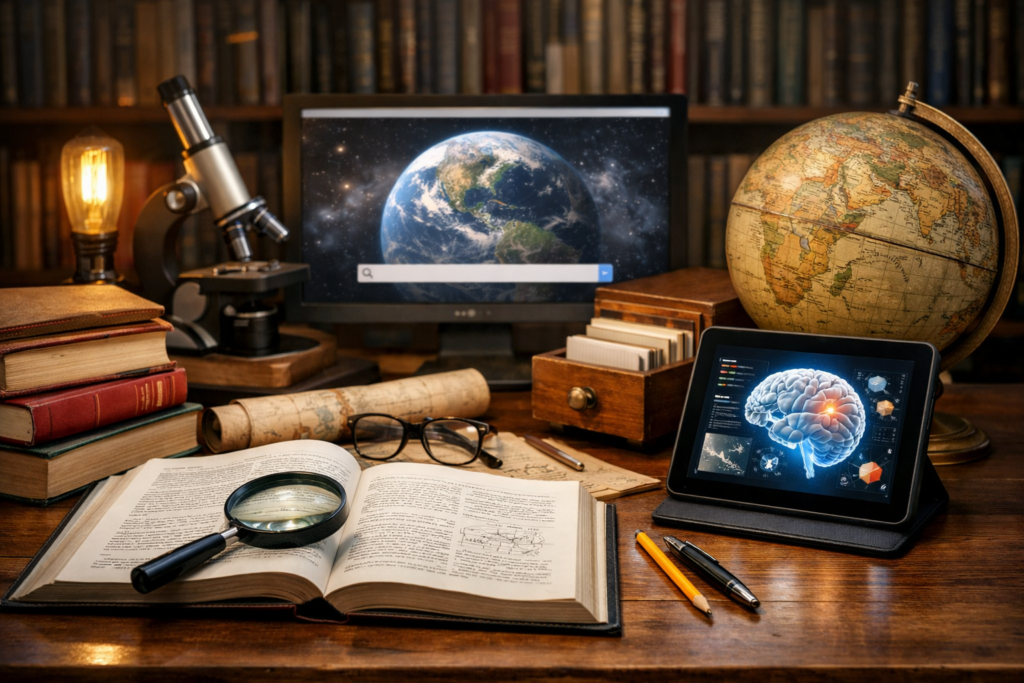
Education and Reference: A Partnership That Builds Knowledge
Education is the structured process of developing understanding, skills, and habits of mind. Reference is the ecosystem of sources—books, databases, archives, encyclopedias, manuals, indexes, and curated guides—that supports inquiry and decision-making. Together, they form a practical partnership: education teaches people how to think and learn, while reference helps learners find, verify, and deepen what they know.
In classrooms, reference tools underpin research assignments, reading lists, and lesson planning. Beyond formal schooling, reference resources power workplace training, professional certifications, civic participation, and personal curiosity. In an era of constant information flow, the ability to navigate reference material responsibly has become a core educational outcome.
From “Knowing Facts” to “Knowing How to Find and Evaluate”
Modern education increasingly emphasizes competencies rather than memorization alone. Facts still matter, but the challenge is that facts are abundant, uneven in quality, and sometimes intentionally misleading. Reference literacy—knowing where to look, how to compare sources, and how to cite responsibly—bridges the gap between raw information and reliable knowledge.
Key skills education draws from reference practice
- Question formulation: turning a broad topic into searchable, researchable questions.
- Source discovery: selecting the right tool (catalog, database, handbook, primary archive) for the task.
- Evaluation: assessing credibility, methods, bias, timeliness, and corroboration.
- Synthesis: combining multiple sources into an original understanding.
- Attribution: citing sources to respect intellectual property and enable verification.
What Counts as “Reference” Today?
Reference once conjured images of dictionaries and encyclopedias on a library shelf. Those still matter, but reference now includes digital tools and specialized resources that are often invisible until you need them. The best reference sources are not just comprehensive; they are organized for retrieval and designed for dependable use.
Common categories of reference resources
- General reference: dictionaries, encyclopedias, almanacs, atlases, style guides.
- Scholarly reference: academic databases, peer-reviewed journals, annotated bibliographies.
- Technical and professional: standards (e.g., engineering or safety), handbooks, clinical guidelines, legal codes, policy manuals.
- Primary sources: historical documents, datasets, interviews, images, government records, lab notebooks.
- Community and local knowledge: local archives, oral histories, cultural repositories, organizational records.
Each category serves different goals. A dictionary helps clarify meaning; a standards document helps ensure safety and interoperability; a dataset supports analysis; primary sources allow original interpretation. Education becomes more powerful when learners can match the question to the right kind of reference.
Libraries and Librarians as Learning Infrastructure
Libraries are often described as quiet places full of books, but their deeper function is educational infrastructure. Libraries provide access, curation, and guidance—especially critical where budgets, paywalls, or connectivity limit what learners can reach on their own. Librarians act as expert navigators of information systems, teaching search strategies, building collections aligned to curricula, and supporting research integrity.
In schools, libraries strengthen reading development and inquiry-based learning. In universities, they support advanced research through subject specialists, data management help, and instruction on citations and academic honesty. Public libraries extend educational opportunity across a lifetime, offering language learning, digital literacy support, career resources, and reference assistance for everyday problems.
Digital Reference: Speed, Scale, and New Risks
Digital tools have transformed reference work by making sources searchable at massive scale. Keyword search, hyperlinking, and machine indexing reduce the friction of finding information. However, speed can hide weaknesses: search rankings are not the same as reliability, and popularity is not proof.
Practical checks for digital reference quality
- Authority: Who authored or funded the resource? What expertise and editorial oversight exist?
- Evidence: Are claims supported by data, citations, or transparent methods?
- Currency: When was it updated, and does the topic require the latest guidance?
- Corroboration: Do other independent, credible sources agree?
- Purpose and bias: Is it informative, persuasive, commercial, or political—and is that disclosed?
Education benefits when learners treat digital reference as a starting point, not a final answer. A quick summary might clarify terms, but deeper understanding usually requires comparing multiple sources and tracing claims to original evidence.
Reference in the Classroom: Teaching Research as a Process
Strong research assignments don’t simply ask students to “use three sources.” They teach a process: exploring background context, refining a question, gathering evidence, and communicating findings. Reference materials serve different stages of this process. For instance, a general encyclopedia can provide orientation, while scholarly articles supply arguments and methods, and primary sources anchor analysis.
Well-designed instruction also makes citation meaningful. Citations are not only rules to avoid plagiarism; they are a map of how knowledge is built. By following citations, learners can verify claims, locate foundational studies, and see how ideas evolve over time.
Lifelong Learning: Reference Beyond School
Education does not end with graduation, and reference does not belong only to academic settings. People use reference tools to understand medical options, compare financial products, interpret news, learn new software, or research local issues. The same habits—asking precise questions, checking sources, and seeking expert consensus—apply.
In workplaces, reference supports safe practices, consistent procedures, and professional growth. In civic life, it supports informed voting and community decision-making. In personal life, it supports everything from home repair to language learning. The common thread is empowerment: reference resources allow learners to act with confidence rather than guesswork.
Building Better Education-and-Reference Habits
Improving how we learn from reference sources is less about memorizing which website to trust and more about building repeatable routines. Small changes in approach can dramatically improve accuracy and understanding.
- Start broad, then narrow: use background reference to define terms before diving into specialized sources.
- Prefer sources with transparent methods: look for citations, data, editorial policies, or peer review.
- Document as you go: capture bibliographic details early to avoid lost sources and sloppy attribution.
- Use multiple formats: combine text, data, and primary documents for a fuller picture.
- Ask experts: librarians, instructors, and professional organizations can point to vetted reference pathways.
Conclusion: Turning Information into Understanding
Education and reference are two sides of the same mission: enabling people to learn effectively and act wisely. Education builds the skills to interpret, reason, and communicate; reference provides the structured, retrievable foundation of evidence and explanation. When learners become fluent in both, they gain something more durable than memorized facts—the ability to build knowledge responsibly in any context.