

Beyond the Textbook: How Education and Reference Shape Lifelong Learning
Understanding “Education and Reference”
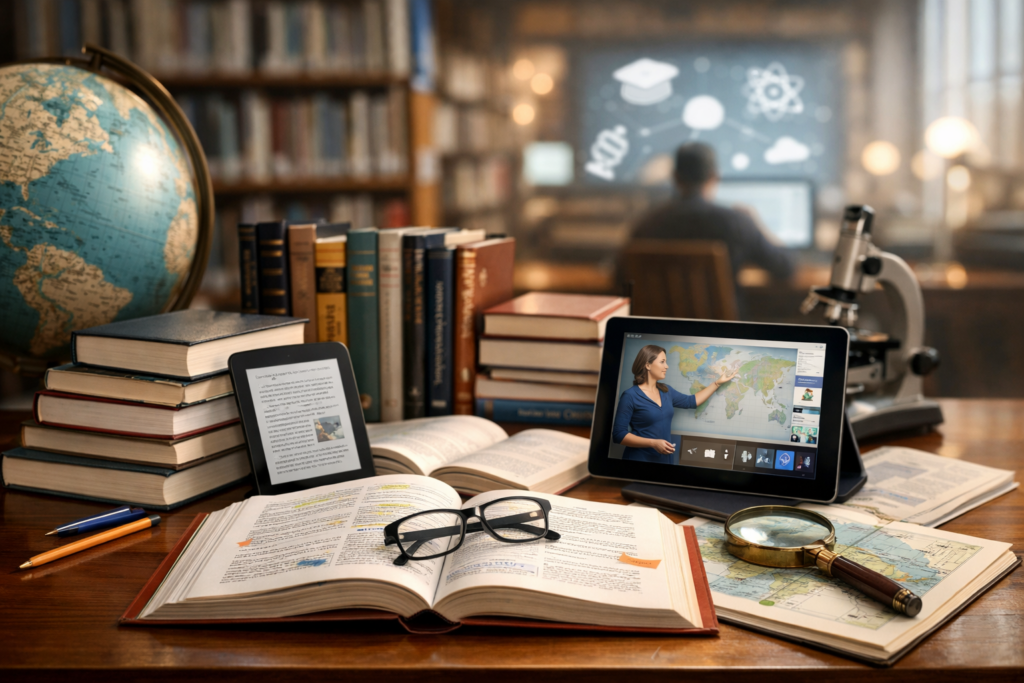
“Education and Reference” describes the ecosystem of resources people use to learn, confirm facts, and expand skills—from classrooms and curricula to dictionaries, encyclopedias, databases, and digital libraries. Education typically provides structured learning pathways: goals, lessons, assessments, and mentorship. Reference resources, on the other hand, are built for targeted retrieval: you consult them when you need to define a term, verify a claim, find a citation, or compare viewpoints.
In modern life, the boundary between education and reference has blurred. A student watching a lesson may pause to check a concept in an online encyclopedia; a professional may take a short course and then rely on standards documents, manuals, and research databases to perform the work accurately. The most effective learners combine both: they build a strong framework through education and maintain it through consistent reference use.
Why Reference Matters in a Learning World
Reference tools do more than provide answers. They help learners practice the habits that make knowledge durable: checking sources, understanding context, and tracing ideas to original evidence. This becomes crucial when information is abundant but uneven in quality.
- Verification: Confirming dates, definitions, statistics, and quotations reduces errors.
- Context: Good references offer background, related concepts, and links to broader themes.
- Depth on demand: Learners can quickly move from a summary to advanced material.
- Transfer to real tasks: Manuals, handbooks, and standards translate learning into practice.
Core Types of Reference Resources
Reference is not a single category; it is a toolkit. Choosing the right tool depends on what you need: a definition, an overview, a primary source, or scholarly consensus.
Foundational References
- Dictionaries and thesauri: Clarify meaning, spelling, usage, and tone—especially important for writing and language learning.
- Encyclopedias: Provide reliable overviews, key terms, and starting points for further research.
- Atlases and gazetteers: Support geography, history, demographics, and place-based research.
Academic and Professional References
- Scholarly databases: Index peer-reviewed articles, conference proceedings, and systematic reviews.
- Handbooks and companions: Summarize a field’s established concepts and major debates.
- Standards and specifications: Define requirements in engineering, healthcare, finance, and technology.
- Legal and policy resources: Provide statutes, regulations, case law, and interpretive guidance.
Primary Sources and Archives
Primary sources—letters, original datasets, interviews, historical newspapers, lab notebooks—anchor learning in evidence. Archives and curated collections add metadata, provenance, and preservation practices that help learners evaluate authenticity.
How Education Uses Reference to Build Critical Thinking
When reference use is integrated into instruction, learners shift from memorization to reasoning. Instead of “knowing” a fact, they learn how facts are established and how claims can be checked.
- Research skills: Finding relevant material, refining keywords, and using subject headings.
- Source evaluation: Assessing authority, bias, currency, methodology, and citations.
- Synthesis: Comparing multiple sources to identify patterns, disagreements, and gaps.
- Academic integrity: Citing correctly and distinguishing one’s own ideas from referenced material.
These skills are transferable. A student evaluating sources for a history paper is practicing the same discipline a manager uses to review market reports or a clinician uses to interpret updated guidelines.
Digital Reference: Power and Pitfalls
Digital reference tools have made learning faster and more accessible: searchable full texts, cross-linked citations, translation support, and multimedia explanations. However, ease of access also increases the risk of shallow reading, overreliance on single sources, and exposure to low-quality or manipulated information.
To use digital reference effectively, learners benefit from a few practical habits:
- Triangulate: Confirm important claims across at least two independent, credible sources.
- Follow citations: Trace summaries back to primary research or official documents.
- Check dates and versions: Ensure you are using current editions, updated guidelines, and corrected datasets.
- Distinguish popularity from reliability: High rankings and engagement do not guarantee accuracy.
Libraries and Librarians as Learning Infrastructure
Libraries—public, academic, and special—are a central bridge between education and reference. They provide curated collections, digital access, research support, and information literacy instruction. Librarians are trained to help users articulate what they need, navigate complex databases, and evaluate materials. In many communities, libraries also reduce inequity by offering internet access, study spaces, assistive technologies, and free programming.
In academic settings, library services often extend into course design through reading lists, embedded librarianship, and workshops on citation management and database searching. In workplaces, corporate and medical libraries help teams find evidence quickly and reduce risk by supporting accurate decision-making.
Building a Personal “Reference System”
One of the most practical outcomes of education is learning how to keep learning. Creating a personal reference system can make that continuous growth easier and more reliable.
- Start with a trusted core: Identify a small set of high-quality references you can return to regularly (a dictionary, a style guide, one or two subject encyclopedias, and a few authoritative sites).
- Use a note-and-citation workflow: Save sources with key quotes, page numbers, and links so you can retrace your steps.
- Maintain a “concept map”: Keep a living outline of concepts and how they connect; add references as you learn.
- Schedule review: Revisit foundational references periodically to correct misconceptions and update knowledge.
The Future of Education and Reference
As artificial intelligence, open educational resources, and digital publishing evolve, reference materials will become more interactive, personalized, and interconnected. Yet the underlying goals will remain stable: reliable access to knowledge, transparency about sources, and the ability to learn independently. Education provides structure and progression; reference provides precision, accountability, and breadth. Together, they form a resilient approach to learning—one that helps people adapt to new information, new tools, and new challenges throughout life.